According to a study by Australian Associated Motor Insurers Limited, kangaroos are responsible for roughly 90% of all wildlife-vehicle collisions in Australia, followed by wallabies, wombats, and deer.
That high percentage is due in large part to the sheer number of kangaroos that live in the Australian wilds. In 2024, the Australian government reported that there were about 35.3 million kangaroos in the country — or roughly 1.36 kangaroos for every person.
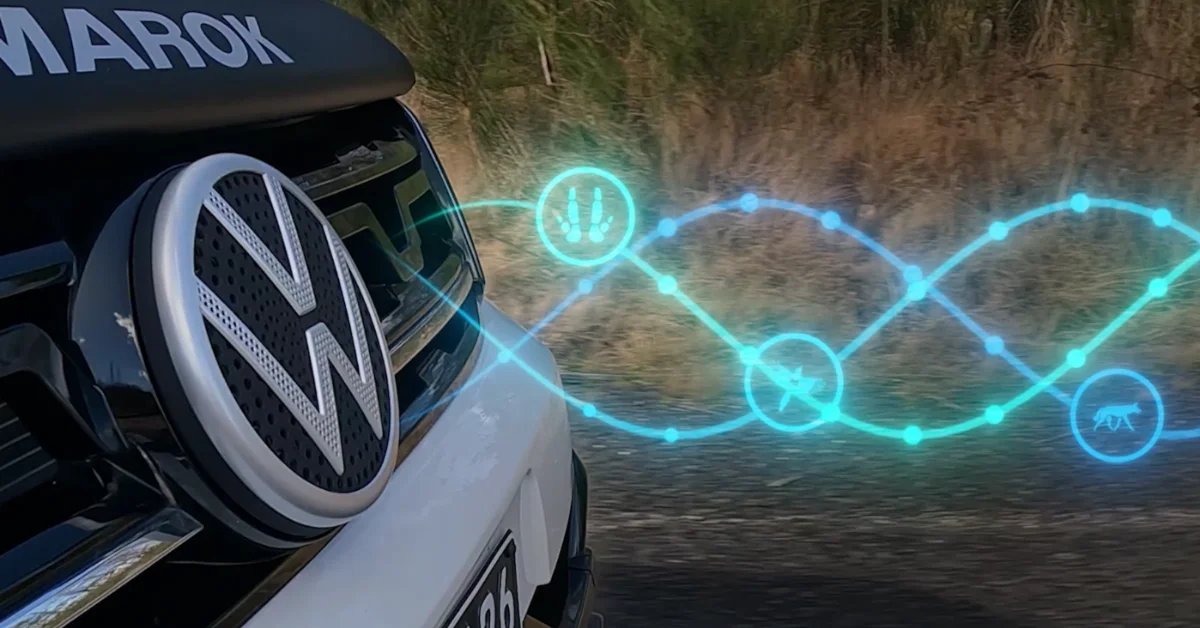
In 2019, Volkswagen began pioneering a solution that aimed to reduce kangaroo-vehicle collisions with a new front-bumper safety feature called a “RooBadge.”
By partnering with Helena Bender, Ph.D., and associate professor Graeme Coulson, the country’s leading kangaroo behaviorist from the University of Melbourne, the automobile manufacturer designed high-frequency sounds that would alert — and deter — approaching kangaroos.
“The RooBadge utilizes a unique approach to audio-based deterrents by mixing meaningful sounds to kangaroos (like bird alarm calls, predatory sounds, and kangaroo foot thumps) with synthetic sounds,” Volkswagen stated on its website.
“With multiple species of kangaroo found across Australia, all of which react differently to different sounds, producing a single sound to deter them all is nearly impossible,” the manufacturer explained.
“So, in a world-first innovation, RooBadge uses machine learning to compare its GPS coordinates against kangaroo distribution data to optimize its sound, deterring the kangaroo species that inhabit that location.”
Volkswagen is also working with the Wildlife Information Rescue and Education Service to improve its kangaroo distribution data and identify new “hotspots” for kangaroo collisions.
According to the latest official update from Volkswagen, the safety feature is currently undergoing its fourth round of testing.
“The main thing is we would never come to market with anything that doesn’t work, and especially in this space,” Volkswagen commercial vehicles director Nathan Johnson told CarsGuide.
“We’ll continue going through the testing process, making sure that it is a viable option.”
In addition to keeping kangaroos off of busy roads, Volkswagen believes that once their RooBadge technology is perfected, it could be replicated for other animals at the forefront of wildlife conservation efforts.
“Animal collisions are a global problem, with deer being the most significant issue across Europe and North America,” the company stated. “So, we’re working with partners overseas to adapt RooBadge to deter deer and other problem animals worldwide.”
In the meantime, government officials and wildlife experts have been trying to get the word out through road safety PSAs and “Kangaroo Crossing” signs.

“It’s really important that drivers are on the lookout for wildlife on the roads — particularly at dawn and dusk,” Chris Emerson, an insurance research specialist, told the Australian Broadcasting Corporation.
“If you spot an animal on the road while driving, remember to brake but don’t swerve, as this may cause a collision with other cars,” they added. “When driving in an area where animals could be present, take note of any signage about local wildlife and slow down.”
Unfortunately, a sad reality is that a struck kangaroo may be carrying a baby kangaroo — called a joey — in their pouch. Joeys typically stay inside their mother’s pouch for about six to 10 months after they’re born, depending on the species.
If a joey is orphaned in a car accident, WIRES works with a network of volunteers to rehabilitate them. Volunteers like Diane Kirkland, who has been rescuing injured and orphaned joeys on roads in western New South Wales for almost a decade.
“I’m a sucker for animals, and I look at it this way: Even if one dies, I am happy to say that it didn’t die out on the open road, out in the cold,” Kirkland said. “It was loved, it was looked after.”
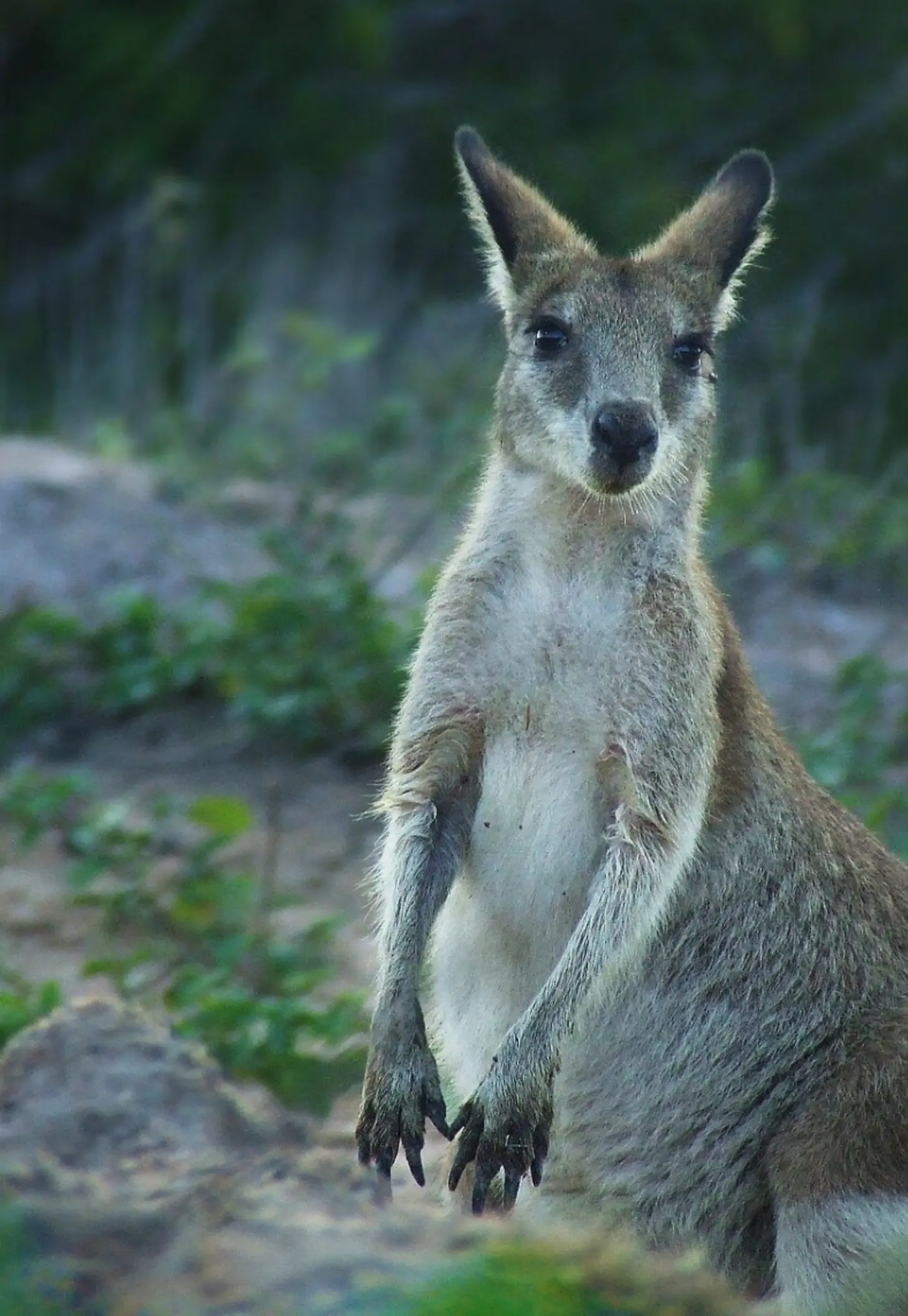
She’s lost count of the number of joeys she has raised and released on her farm.
“Once they don’t have a bottle anymore, they are not in a yard anymore; they just roam the property,” Kirkland explained.
“If they do come home, they lie on the lawn. I always leave a bucket of water out for them; I leave pellets out for them in case they need something extra besides the dry grass.”
You may also like: India uses color psychology to prevent wildlife collisions: 'Red roads, green intent'
Featured Image: Volkswagen