Globally, it’s estimated that over 500 billion disposable coffee cups are used every year.
Traditional “paper” cups contain plastic linings that make them hard to recycle and that can release microplastic particles into hot drinks.
It’s not only bad for people’s health — it’s bad for the planet.
Notpla, a play on “not plastic,” wants to make trips to the coffee shop less wasteful. So it trialed the first-ever sustainable espresso cups coated with seaweed during the Earthshot Prize in Rio in 2025.
Now, Notpla has secured a €4 million Horizon Europe grant (about $5.4 million USD) to develop a market-ready coffee cup that is fully home-compostable.
“Notpla uses seaweed, one of nature’s most abundant and fastest growing resources, to replicate the qualities of plastics, replacing millions of items of single-use plastic packaging,” said Pierre-Yves Paslier, co-founder of Notpla, in a press release.
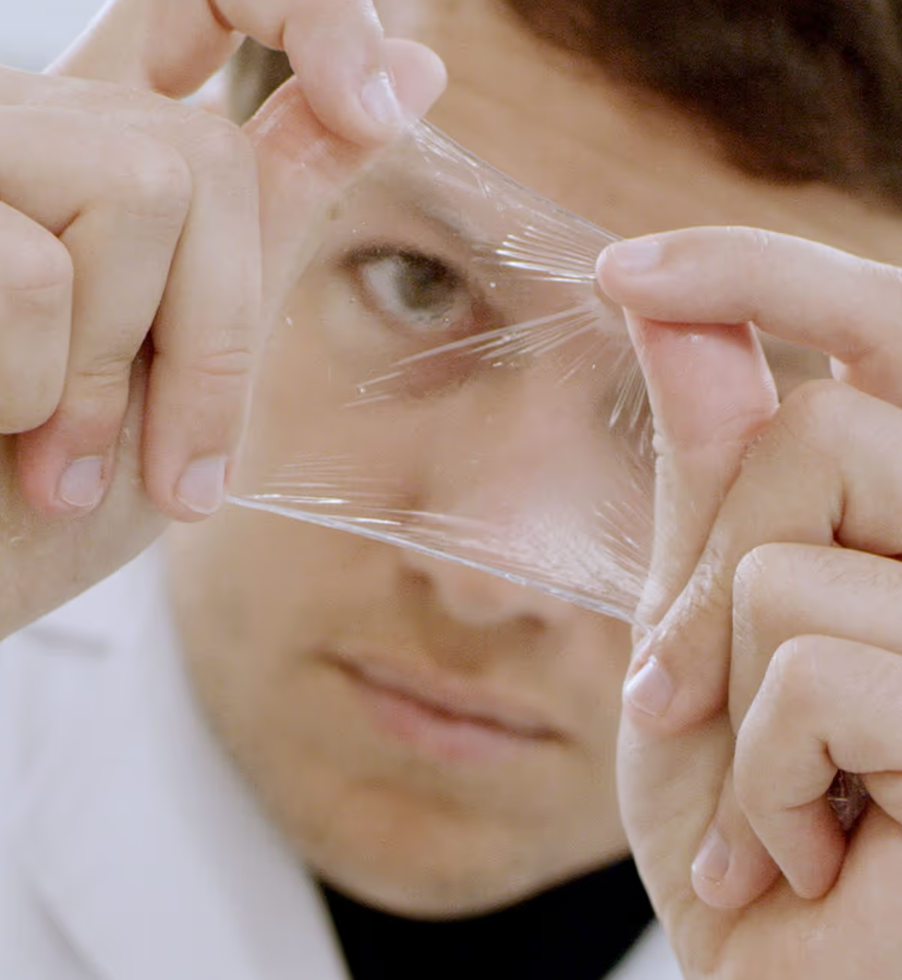
“Other benefits of using seaweed include: It doesn’t compete for crops on land, actively sequesters CO2 and de-acidifies the ocean, boosts ocean diversity, and uplifts coastal communities, as well as being biodegradable.”
“The disposable coffee cup looks like a simple invention, but it hides a complex problem,” Paslier said. “This project gives us the chance to tackle that issue at its source.”
Karlijn Sibbel, the Chief Innovation Officer of Notpla, told Good Good Good that nature has already spent “billions of years perfecting packaging that doesn’t outlive its contents: Fruit.”
“That's the blueprint we follow at Notpla,” she said. “With our uncompromisingly natural solution, European funding, and a consortium covering raw materials all the way to real-world end-of-life testing, we're ready to solve one of the most complex packaging challenges: replacing the plastic-coated coffee cup.”

A version of this article originally appeared in the 2026 Environment Edition of the Goodnewspaper
Header image via Notpla