In Indonesia, a busy road in Pakpak Bharat cuts through the natural habitat of roughly 350 critically endangered Sumatran orangutans, separating them into two forest areas: the Siranggas Wildlife Reserve and the Sikulaping Protection Forest.
Over time, as the road was upgraded, the gap in the forest canopy between the two forests widened into a gap far too big for tree-dwelling animals to traverse safely.
That’s when conservationists from the United Kingdom’s Sumatran Orangutan Society joined with Tangguh Hutan Khatulistiwa, or TaHuKah, to build an artificial canopy bridge to reconnect the two vital habits.
“Development was necessary for people,” Erwin Alamsyah Siregar, executive director of TaHuKah, told The Associated Press. “But without intervention, it would have left orangutans trapped on either side.”
Since the canopy bridge was first built in 2024, only smaller animals were seen traversing the roadway. Camera traps recorded footage of squirrels, langur monkeys, macaques, gibbons using the artificial canopy.

But for two years, officials saw no sight of the 100-plus pound Sumatran orangutan attempting the crossing.
Then, they slowly appeared. Building nests near the bridge and testing its ropes.
“They observe,” Siregar said. “They don’t rush. They watch, they try, they retreat. Only when they’re certain it’s safe do they move.”
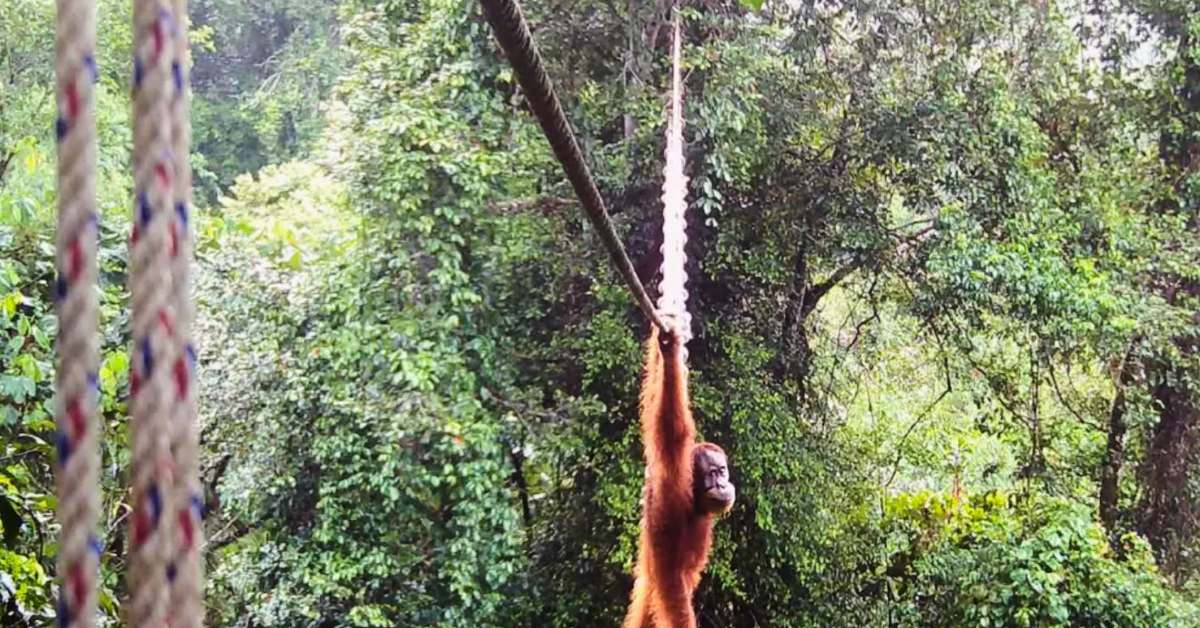
On April 27, a Sumatran orangutan finally stepped across the bridge for the first time.
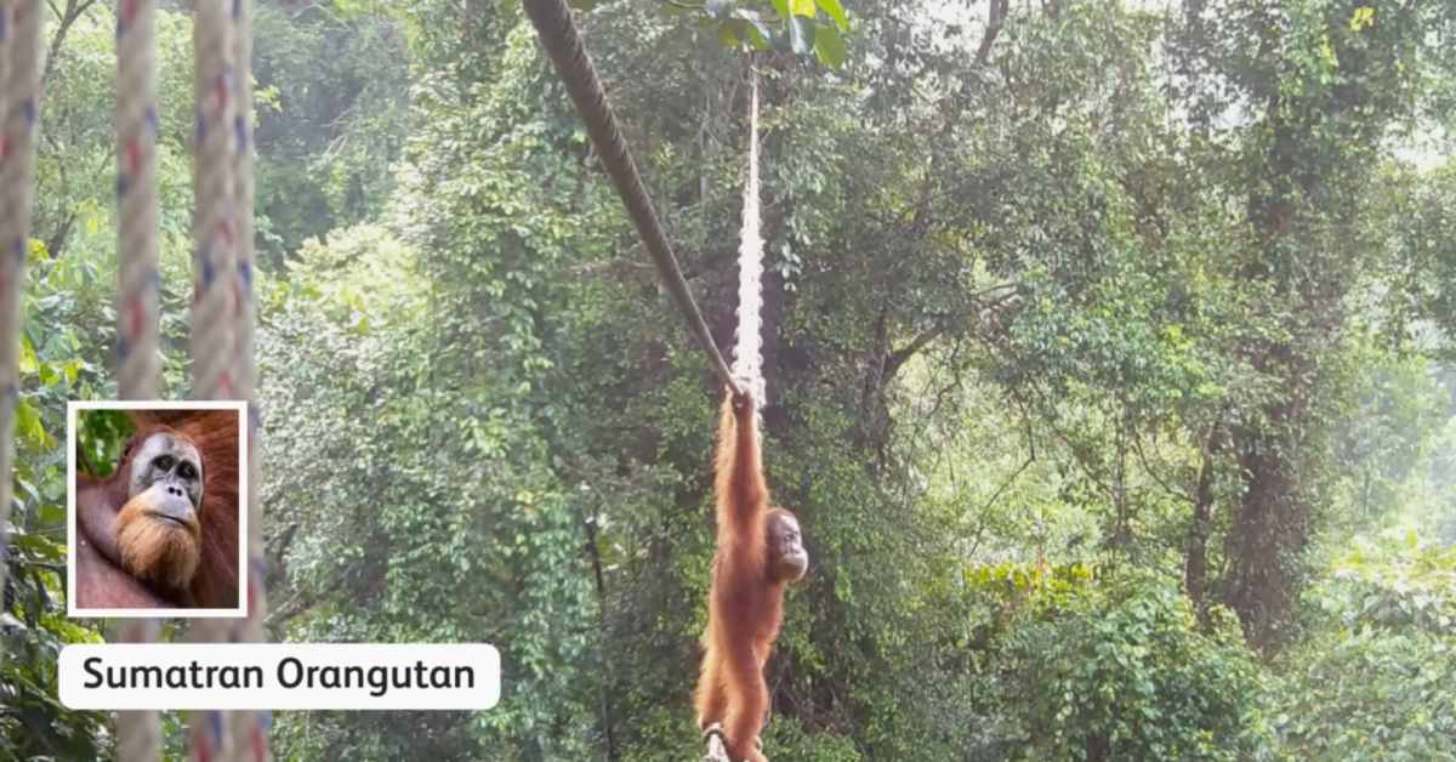
“This was the moment we had been waiting for,” Siregar said. “We are very grateful that the canopy here provides benefits for orangutan conservation efforts.”
Habitat fragmentation can isolate animal populations, increasing inbreeding and reducing genetic diversity.
By reconnecting the two forests, the canopy bridge can help orangutans move freely — and keep their population from declining any further.
“These bridges allow orangutans to move, to mix, to maintain healthy populations,” Siregar emphasized. “It reduces the risk of extinction.”
Watch the historic crossing in the YouTube video below:
You may also like: California is building a new overpass to reduce crashes and protect wildlife. It's already working
Header image via Sumatran Orangutan Society / TaHuKah